When you hear “Wagyu,” you might picture an ultra-marbled steak melting like butter on your tongue. But behind that luxurious cut of beef is a world most people never see. Real Wagyu isn’t just a product. It results from tradition, precision, and years of careful care. So, what happens inside a real Wagyu farm in Japan?
A Life of Comfort and Control
Wagyu cows in Japan are raised with a level of care that surpasses the typical livestock treatment. From the moment they’re born, their lives are meticulously managed to minimize stress, which could toughen the meat. Farmers keep a close eye on every cow’s health, diet, and living conditions, ensuring they live a life of comfort and control.
Unlike typical feedlots, these farms are often quiet, clean, and calm. Cattle are housed in well-ventilated barns with plenty of space and clean bedding. Many farms play music or keep cows in smaller groups to avoid crowding.
The Diet Makes the Difference
Wagyu cows are not just fed, they are given a custom diet that goes beyond mere calories. Their meals are carefully crafted, often including a mix of rice bran, barley, corn, and sometimes even beer to stimulate their appetite. This high-energy feed is the secret behind the intramuscular fat or marbling that defines premium Wagyu.
Farmers often hand-feed their cattle, monitor their weight, and adjust meals to match each cow’s growth stage. They do this without the use of growth hormones, ensuring there are no shortcuts in the process. This level of care and attention to detail is what sets Wagyu beef apart.
Daily Routines of Care
Contrary to some internet myths, Wagyu cows aren’t massaged daily or given regular wine, at least not all of them. However, some farms do take the time to brush their cows regularly to keep their coats clean and promote circulation. This daily routine of care is a testament to the dedication of Wagyu farmers.
Keeping cows comfortable, clean, and relaxed is critical. This is part of why real Wagyu beef is known not just for its taste but also for its texture and tenderness.
From Farm to Certification
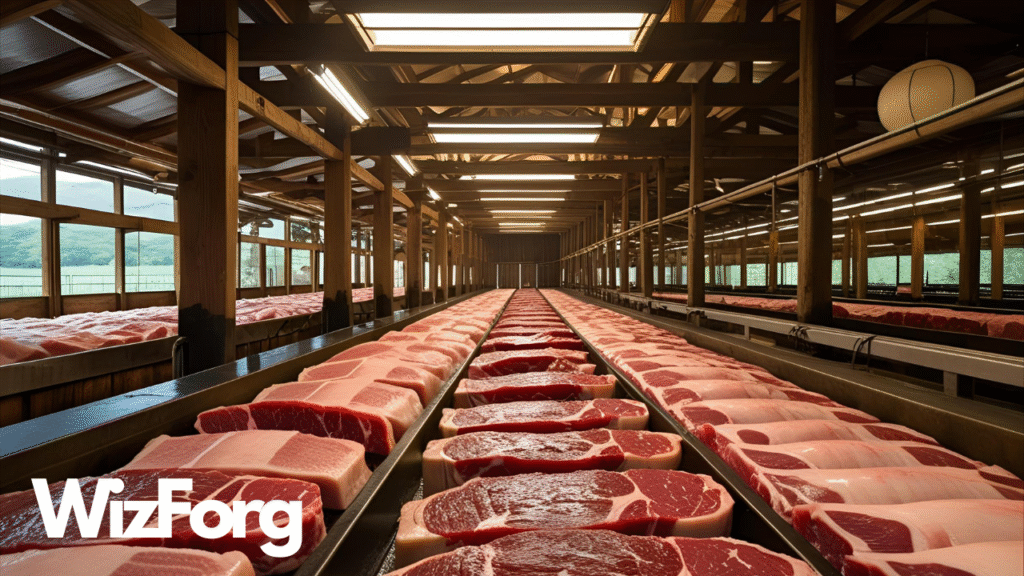
At the end of the process, which takes up to three years, Wagyu cattle are graded by certified inspectors in Japan. The top grade, A5, is awarded only to those with the perfect combination of marbling, color, texture, and fat quality. This rigorous grading process ensures that only the highest quality beef is labeled as Wagyu.
Only beef that passes strict criteria can be called “Japanese Wagyu,” and fewer still meet the premium A5 standard. This rarity is part of what makes A5 Wagyu so highly sought after and prized by food enthusiasts and culinary professionals.
More Than Just Meat
Inside a real Wagyu farm, beef is treated not as a commodity but as a craft. This care, from the cow’s birth to its final cut, is authentic Japanese Wagyu.
Want more behind-the-scenes food stories?
Read more at Wizforg and explore how tradition, science, and culture shape what you eat.
From Farm to Certification
At the end of the process, which takes up to three years, Wagyu cattle are graded by certified inspectors in Japan. The top grade, A5, is awarded only to those with the perfect combination of marbling, color, texture, and fat quality.
Only beef that passes strict criteria can be called “Japanese Wagyu,” and fewer still meet the premium A5 standard.
More Than Just Meat
Inside a real Wagyu farm, beef is treated not as a commodity but as a craft. This care, from the cow’s birth to its final cut, is authentic Japanese Wagyu.
Want more behind-the-scenes food stories?
Read more at Wizforg and explore how tradition, science, and culture shape what you eat.